Welcome to Dragon Rising, Bear Resurgent , a blog I am using to record my Post Cold War wargaming projects. These are focused on expeditionary operations by Chinese, Russian, American and NATO forces in the post Cold War era, modelled and gamed in 20mm & 6mm. The blog includes links to various resources useful to the 21st Centuary Cold War Gamer.
Showing posts with label APC. Show all posts

Saturday, 31 August 2019

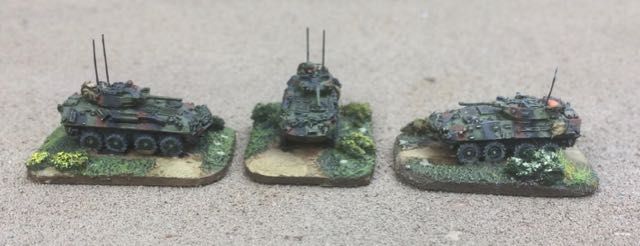
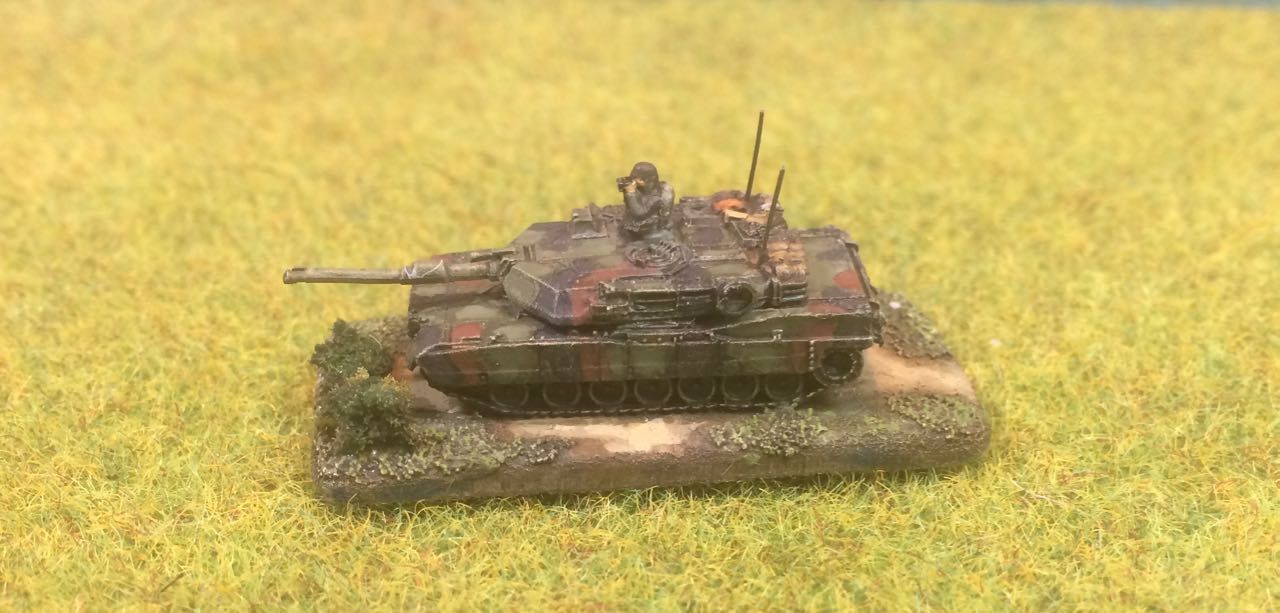
Review Models - 1/285 GHQ, USMC M1 and LAV - 25


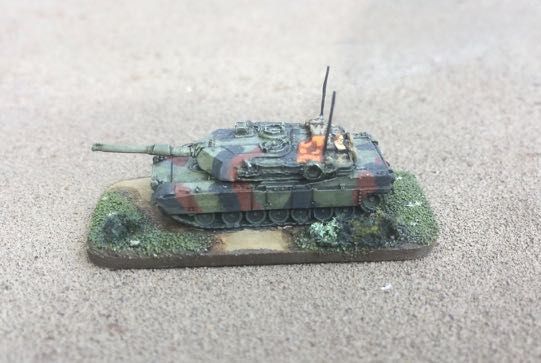
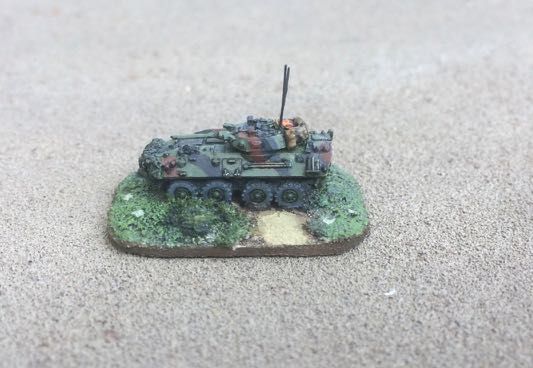
This post reviews the GHQ M1 and LAV 25, covering the general quality of the model, build issues, painting, stowage, markings and basing. Given the small size and the lack of kit building I thought I would do model reviews and builds either in groups or with conversion projects. This is the first group, I am building and painting these for inclusion into an ultra modern USMC force for games set in the present and near future focused on the Pacific Theatre.

The vehicles were ordered from Magister Millenium in the UK and were well packaged and arrived promptly.  The M1 and LAV 25 provide the mainstay of the mechanised/armoured elements of the Ground Combat Component of the Marine Expeditionary unit (MEU), which is the first of the US expeditionary warfare units I am building in 6mm.  


Vehicle Overviews

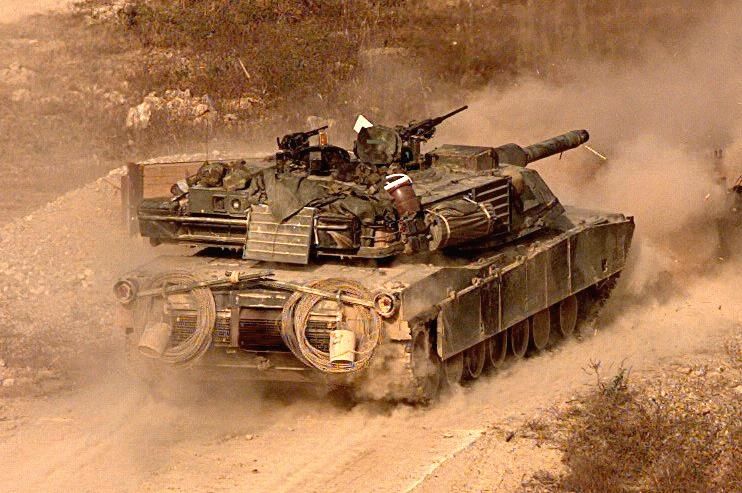
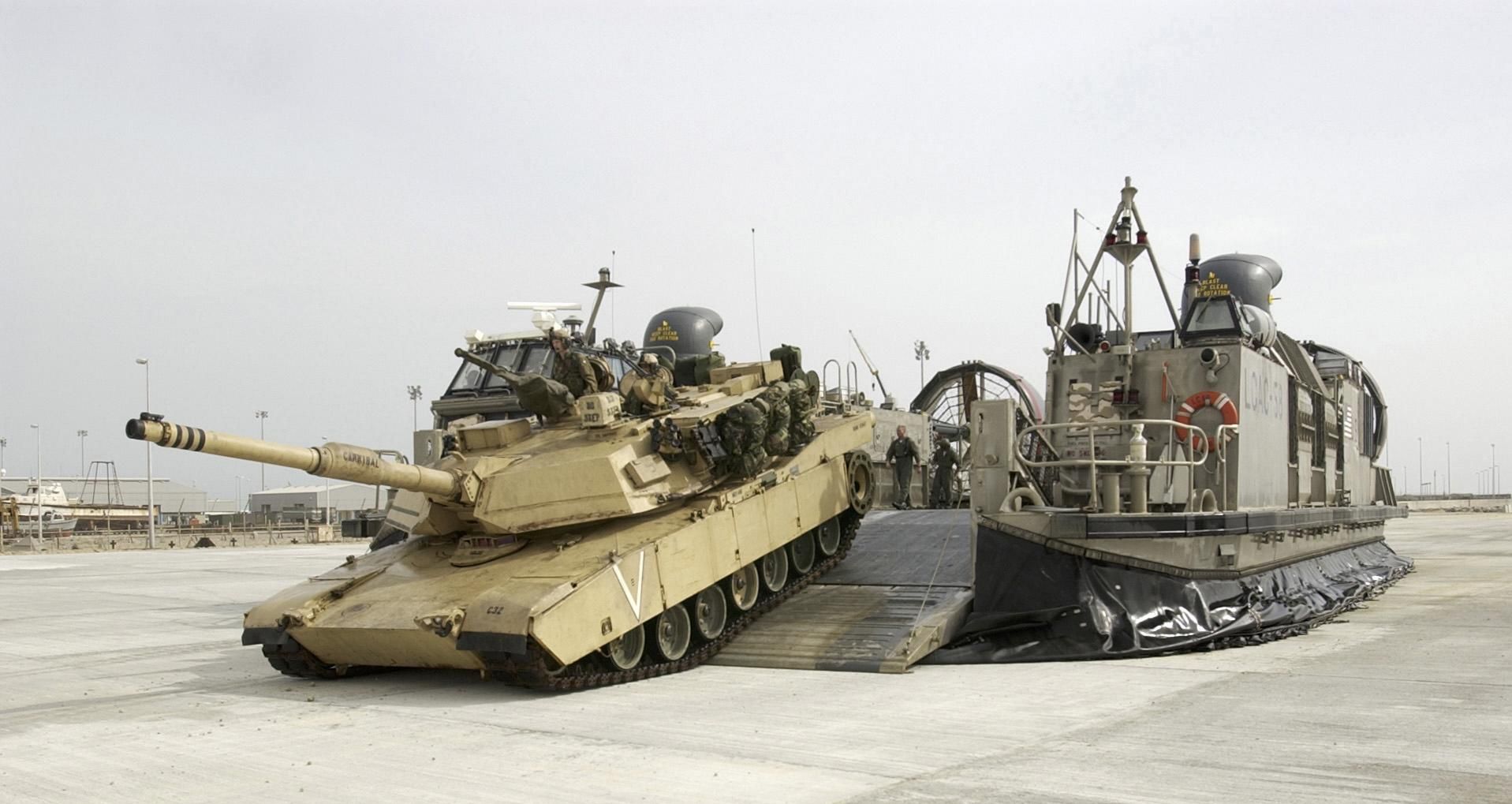
M1 The M1 entered Service in 1980 as a replacement for the US Army's M60A3, the M60 however soldiered on for some time with both the reserve forces and the USMC. The USMC retiring their M60A1s after Gulf War 1 in 1991 and the US Army reserve letting theirs go in 1997.  The M1 was upgraded to the M1A1 with the 105mm gun being replaced by a 120mm gun in 1986. Whilst the US Army is now running with the M1A2C moving to the M1A2D the Marines still have the M1A1. The Marine M1A1 has a number of differences from the Army vehicles to make it fit for operations near the sea. These include different Smoke Grenade Discharger Units and a deep wading kit - handy for getting off landing craft.

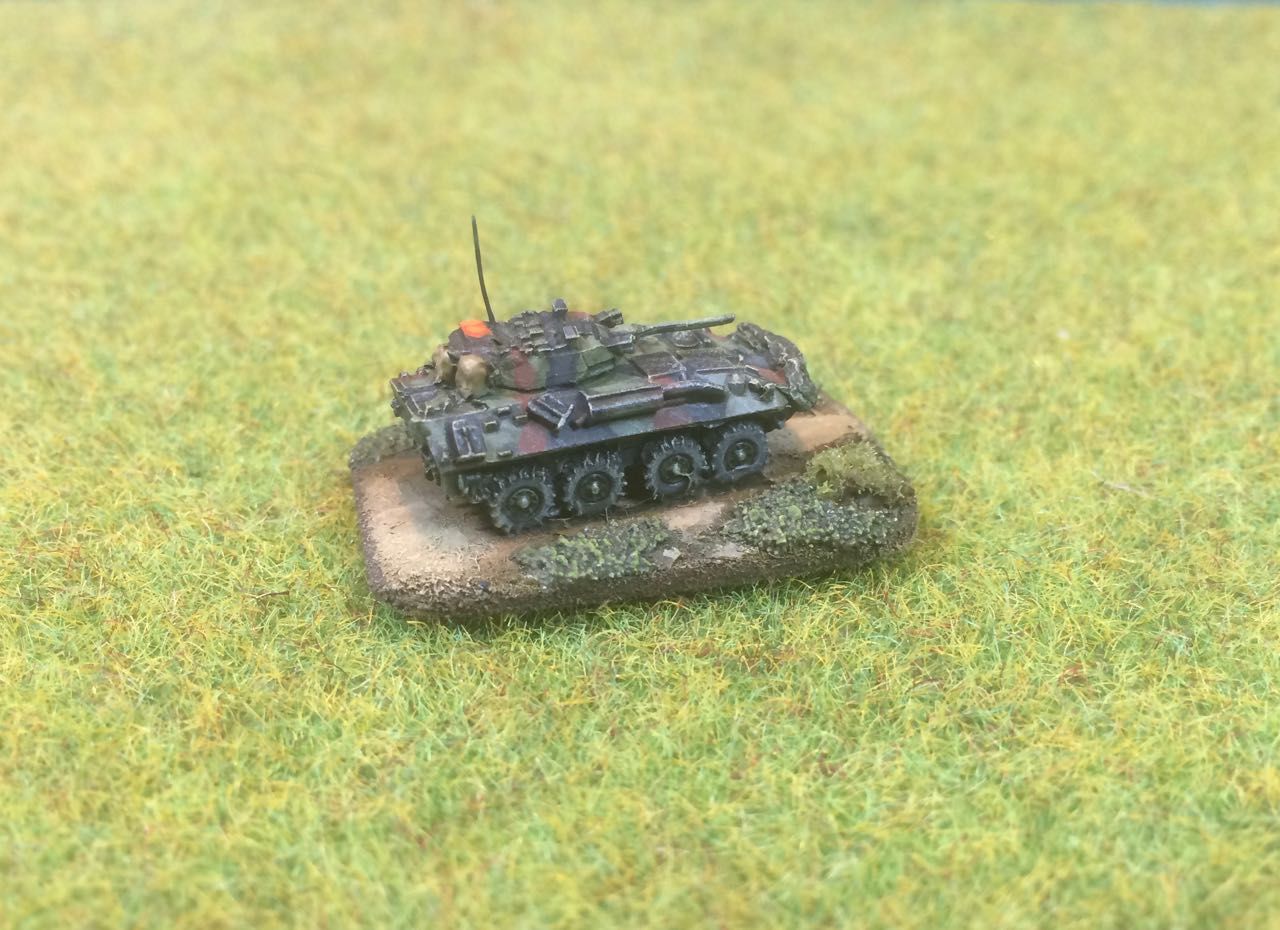
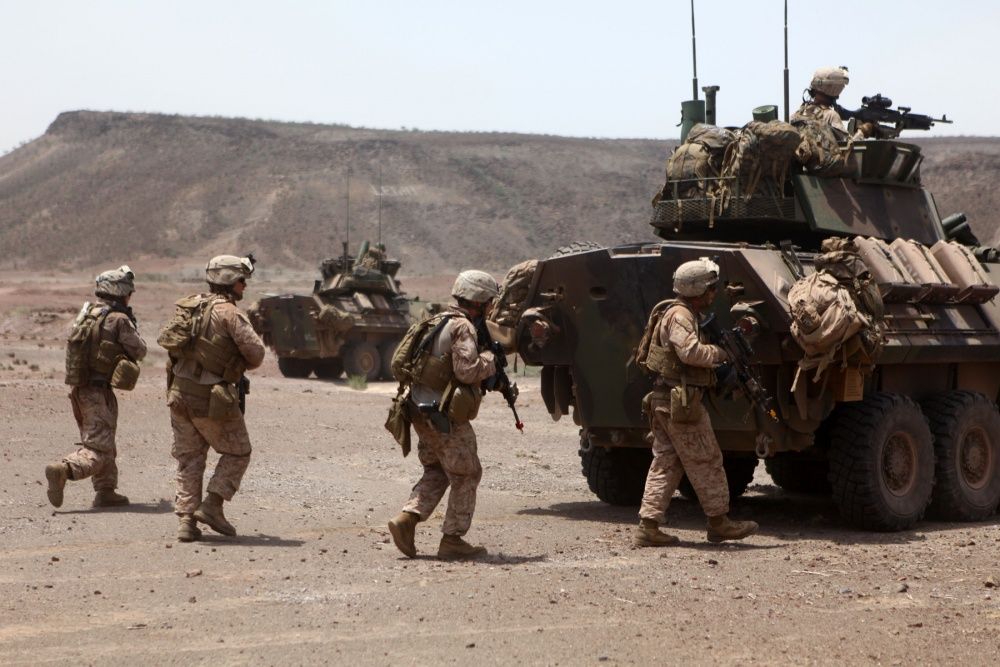
LAV 25 The LAV 25 serves with the Light Armoured Reconnaissance Battalions of the USMC, the vehicle entered service with the Marines in 1983. The LAV 25 A2 currently in service introduced a number of protection enhancements along with TI systems. Whilst the Marines have plans to introduce further upgrades through the LAV 25 A3 they have also just started looking for a replacement vehicle. As well as the base variant a variety of other versions of the vehicle are also in service with the Marines including: Command, Recovery, Logistic, Anti Tank, Mortar and EW.


Models

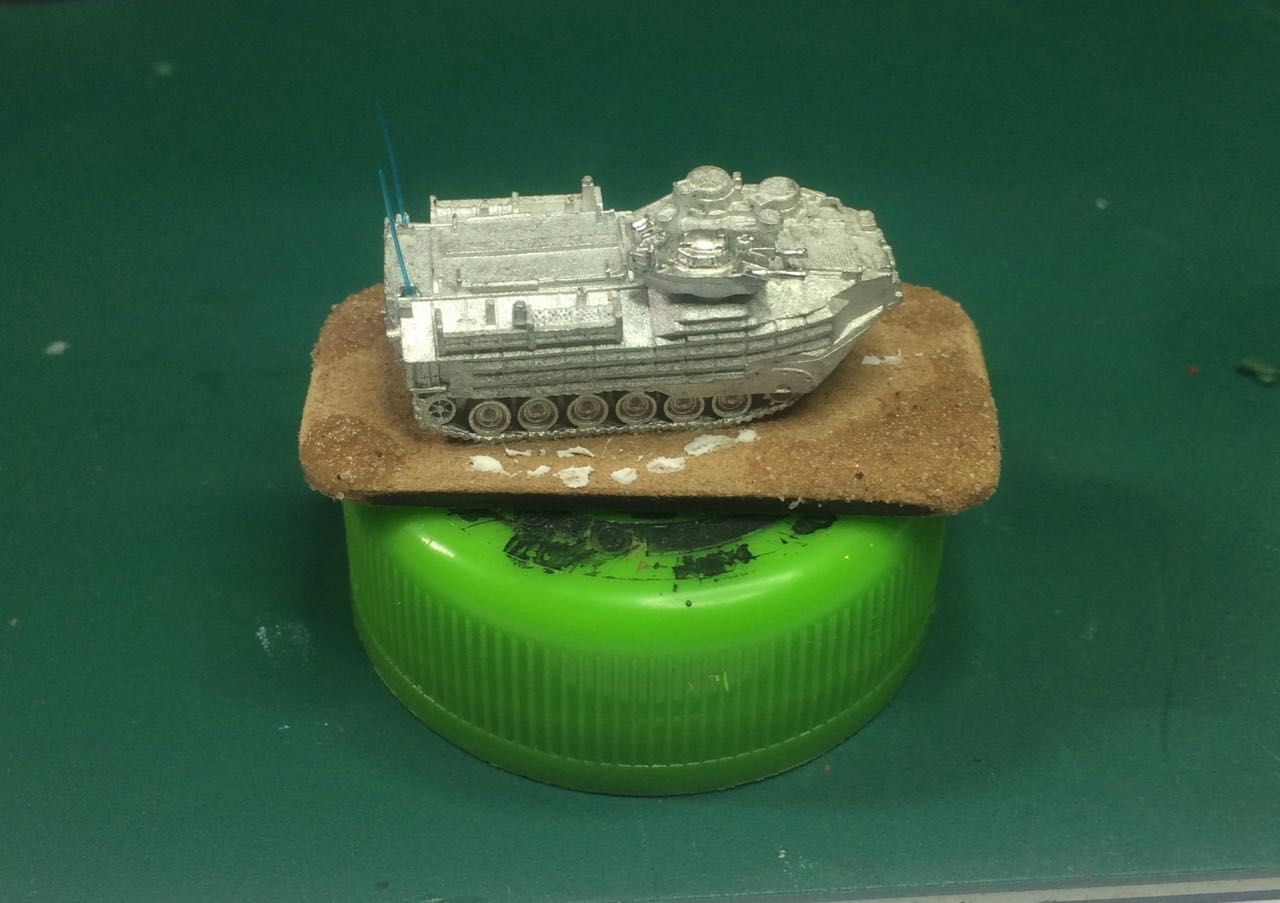
As you might expect from GHQ the vehicles are all precision moulded in white metal, cleanly cast and packed with fine detail.  Without exception all the vehicles purchased were excellent castings all with separate turrets and moulded barrels.
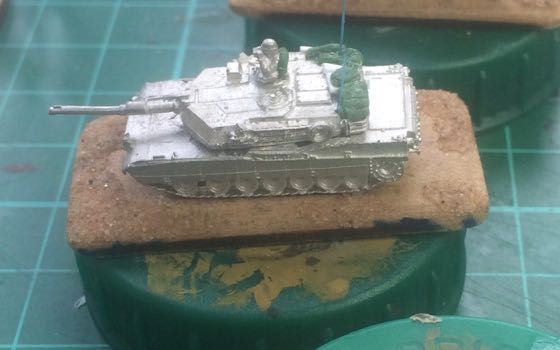


The M1s are supplied with two turret mounted MGs each which because of the fine nature of the casting and small size struggle to survive contact with the postal system despite the extensive packaging and looked challenging to straighten out and then fit.  The models themselves required minimal cleaning and little attention to barrel straightening. Close inspection for small amounts of flash is worthwhile as is identification of the mold injection points which nearly always carry small strings of metal from the casting process and are really annoying to discover during painting. 
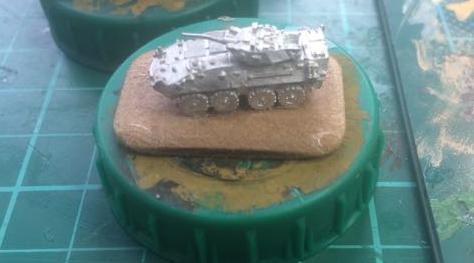


In all cases I have glued the turrets in place keeping the barrels within the footprint of the hull and or hull and base depending on length, in order to reduce the risk of barrel bend during use. The Vehicles have then been mounted on MDF bases with the edges beveled to reduce their height as described in the post on my baseing philosophy.

Stowage and Markings

Siowage has always been part of what I love about the USMC and in fact the US Army, they have a remarkable affinity for strapping stuff all over the outside of their wagons. Offering the opportunity to create some quite unique models for the gaming table
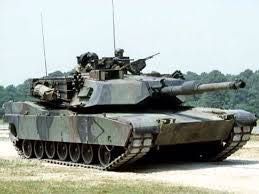
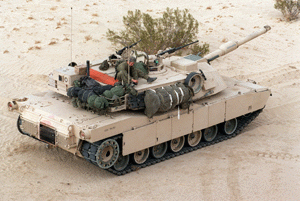

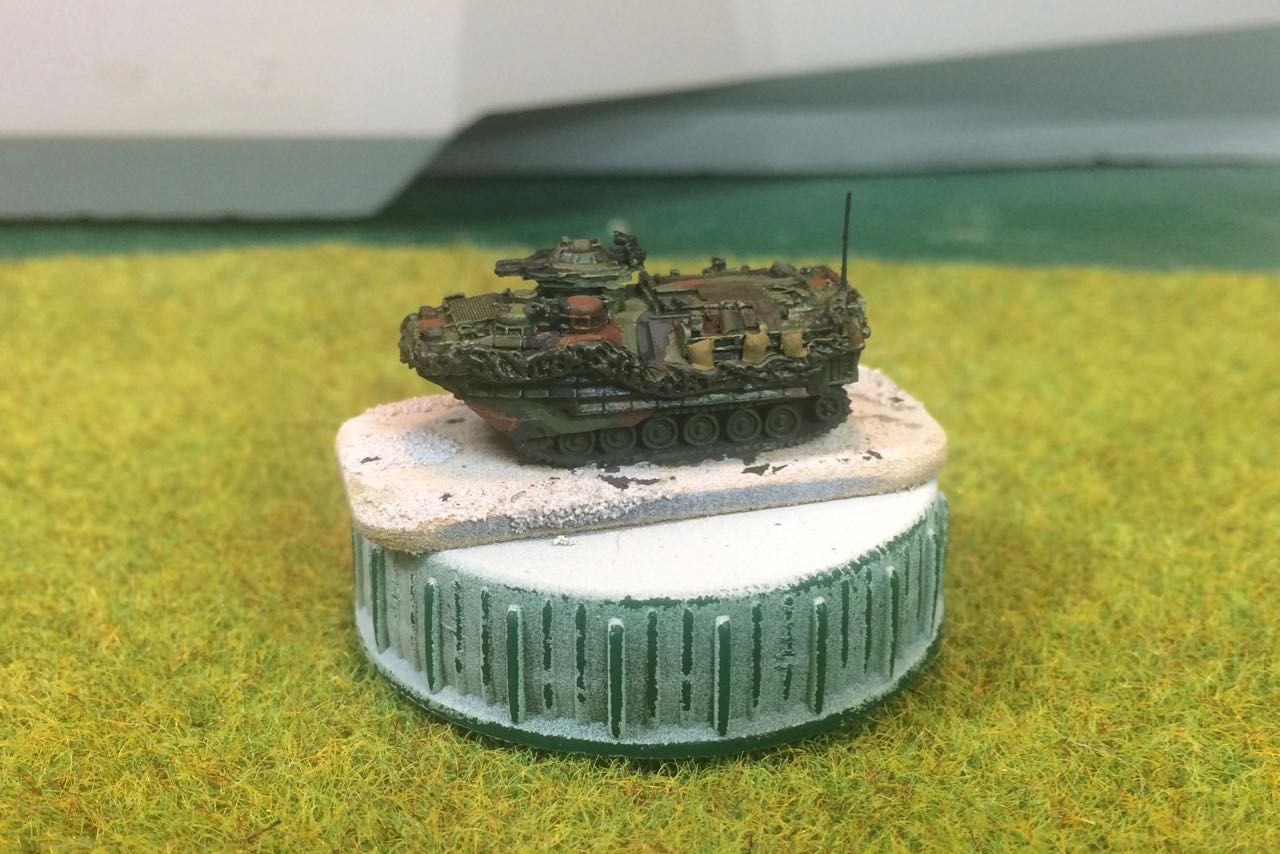
As can be seen from the M1A1 pictures in the post this can cover a wide variety of equipment ranging from personal equipment to spare road wheels, shelters, defence stores lubricants and the ubiquitous air marker panels which can manifest in a number of different sizes and shapes
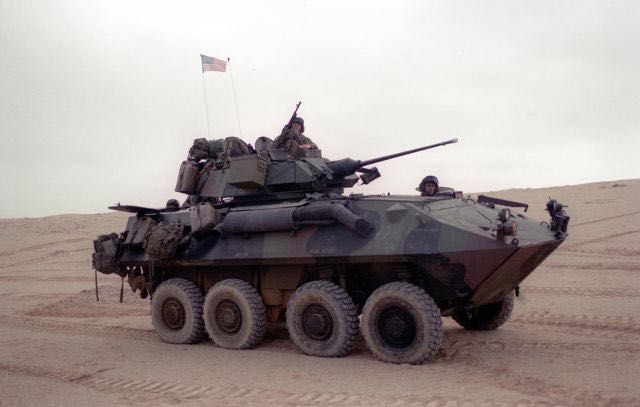
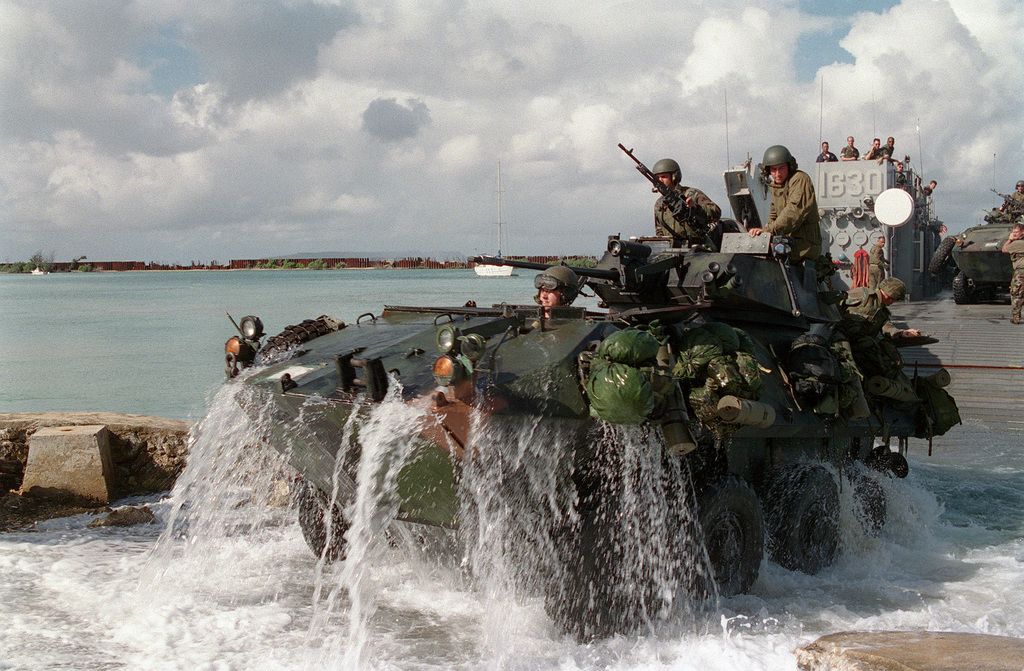
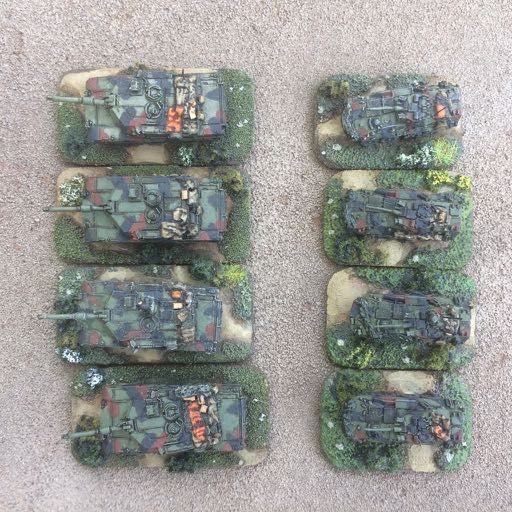
I always think the LAV 25 Crews take the whole stowage thing to a new level, primarily I suspect because of their size and the fact that they carry dismounts in addition to the vehicle crew.  Again a review of a range of images of vehicles on exercises and operations will give you an idea of what might be carried and where it is stowed. To the general list of external stowage can be added spare wheels cam nets and fuel cans which these vehicles always seem to be littered with.

Availability of stowage in this scale is a bit of a challenge although a number of companies offer scale accessories including Heroics and Ross and Perfect Six.  If you want to have a bash at making them yourself my post on Modelling - Stowing USMC Vehicles in 6mm provides a range of approaches to simply representing a wide range stowage items.


As a matter of course Marine vehicles do not seem to carry any tactical markings in the form of Identifying numbers or Symbols. A variety were apparent in the Gulf Wars other than chevrons most of the images I have seen these looked like they had been locally applied to no apparent regulation. I have therefore not applied any to my vehicles.
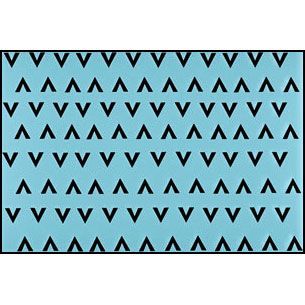
NATO/Israeli chevrons in white and black can be obtained from a number of sources. Magistere Milenium stock them in Black however the lack of contrast between the chevrons and the vehicle colour dissuade me from applying any. 


Painting

I have altered my painting style to accommodate the challenges of 6mm. It all Kicks off undercoating the model in white a change after many years undercoating 20mm in black. In this small scale the model and colours all benefit significantly from a white undercoat. I don't tend to dry brush on the vehicle at the end of the process as I find the effect on top of camouflaged vehicles makes the model look very busy in this scale. All Paints used unless otherwise stated are Vallejo Model Colour

Base Vehicle and Camouflage
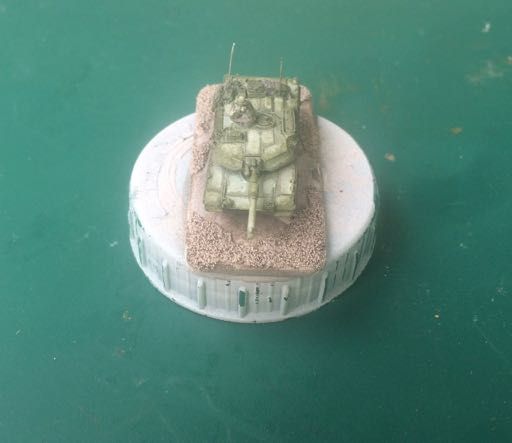
  • 70890 Reflective Green base colour
  • 70846 Mahogany Sand
  • 70860 Black Grey
  • Citadel Nuln Oil Black Wash
A number of dilute coats of the base colour are applied and at least 1 black wash. I then continue to build up the base colour but aim to avoid it becoming too dark allowing the white undercoat and the translucent coats of paint to keep the model a light shade of the base colour. Over shooting this goal leads to highlighting with a mix of the base colour and buff on to the upper surfaces.


Keeping the base colour light enables the model detail to stand out, although I have discovered a number of challenges with this method.
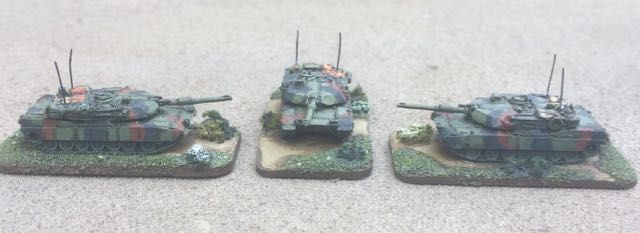
  • Ensuring good coverage of the model to block out the white undercoat needs to be worked at. if I am not looking at the model through a magnifying lens this won't be achieved
  • Applying dilute coats of paint can cause the paint to separate and results in some unusual colours. To avoid this mix the paint immediately before applying and don't let the paint pool on the model, which basically comes down to controlling the amount of paint on the brush.


Once the base colour is sorted I then work on the camouflage pattern. For any particular vehicle I try to keep this consistent which saves thinking too much about the pattern for all the other vehicles  of the same type that you are going to paint and is generally in line with what military organisations do with one or two exceptions.  Researching the pattern can be a challenge particularly for shots of the top of the vehicle, larger scale models and their painting plans can be useful here.
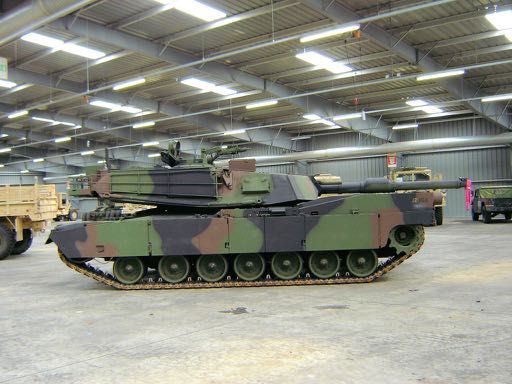
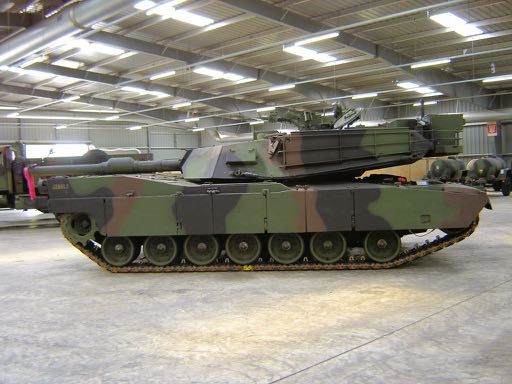


The Camouflage pattern is then applied in line with the reference imagery using a thicker consistency than the base coat in order to gain a level of coverage.  I then generally pin wash before proceeding with undercoating and painting the stowage items and the vehicle detail. The Pin wash is applied direct to the areas of detail rather than all over the vehicle, this can be quite effective if brown is used rather than black.
Stowage Colours
  • 70887 Olive Drab undercoat for brown items
  • 70880 Khaki Grey Packs, highlights + 70976 Buff
  • 70988 Khaki, Tarpaulins, highlights + 70976 Buff
  • 70976 Buff, Ration Boxes
  • Dark Green undercoat for green items
  • 70890 Reflective green, Ammo Boxes, highlights + 70976 Buff
  • 70909 Vermillion for Marker Panels, Highlight 70911 Light Orange
I generally try to limit the number of colours I am working with which saves time and prevents the model becoming too Chaotic.  I undercoat most of the stowage in Olive Drab. This is then overpainted in the relevant colours allowing the undercoat to show through between items or to provide an illustration of folds or the boundary between the top of a pack and the body of a pack.  Items are then highlighted with the addition of Buff to the body colour so for Packs Khaki Grey and Tarpaulins Khaki.  Generally I am looking for high contrast between the vehicle and the stowage item. Air Marker Panels are painted with dabs of crimsen followed by dabs of orange allowing the olive drab and crimson to show through to mark folds.


Vehicle Detail
  • 70860 Black Grey Tracks, Tyres, Weapons and Antena
  • 70860 Black Grey + 70989 Sky Grey Tyre Walls
  • Citadel Agryx Earthshade, wheel wash
  • 70989 Sky Grey Head Lights,
  • 70911 Light Orange Indicators
  • 70909 Vermillion Brake Lights 


Weapons and Tracks are simply painted Black Grey and Tyers are painted black grey and then the tyre walls are painted in a lighter grey using a mix of sky grey and black grey, wheels are usually finished off with a Wash of Agryx Earth Shade. Finally I pick out the light clusters in light grey overpainting with Orange and Crimson where appropriate.

And their you have it. Not the quickest way to get the vehicles on the table but they look quite good when they get their, the quality of the GHQ models is excellent and I think worth the money.


Related Posts:

Modelling - A Baseing Philosophy for 6mm Figures and Vehicles
Modelling - Stowing USMC Vehicles in 6mm

References:

FAS.org M1 Abrams Main Battle Tank
FAS.org LAV and Variants


Saturday, 22 September 2018

Modelling - Stowing USMC vehicles in 6mm


Vehicles in most armies carry a degree of external stowage and there always seems to be more of it when they are on operations rather than exercises, I suspect because ammunition load outs always take up more space when you are expecting to have to fight. The USMC seem to embrace external stowage to the full and pictures of their vehicles from recent deployments nearly always carry an amount of external load.


Having built one USMC force in 20mm I was used to loading their wagons with all sorts of stowage to match the images seen on the web, in the press and my somewhat vivid imagination.  In the land of 6mm, I was not exactly surprised to find that there were limited product ranges out there for representing external stowage and a lot of the techniques I had used for Cam nets and other items looked like they might be of less use in this scale.


One of the great things about 6mm, of which I am rapidly discovering there are many, is that 1mm represents a foot, so it's relatively easy to work out how big the stuff needs to be to fit on the model even for the mathematically challenged like myself.  The other great thing about 6mm is that very small things can be represented by very simple shapes and still look good, although I am generally of the opinion that you need to keep the objects of a fairly consistent size and shape if they are to be credible. Other than that its largely a question of colouring them in.


What Stowage and How to Make it
The ideas I have had to date are based on what one might consider to be common stowage items and the size they need to be, and how I have currently approached be representing them.

  • Crew - Chopped Figures, prone figures with Binos, turned out to be very good, green stuff hatches added to their backs round them out.


  • Radio Antenna, 2-3m long so 6 - 12mm, I went for tooth brush bristles, which are pretty thin virtually indestructible and don't put holes in your fingers.
  • Boxes - Various shapes and sizes from 10-12 inches for ammo cans through to 3-4 feet for ration cartons and large calibre ammunition crates, I went for plastic strip in a variety of thickness and widths, cut to an appropriate length enabling me to easily create multiple consistent boxes.
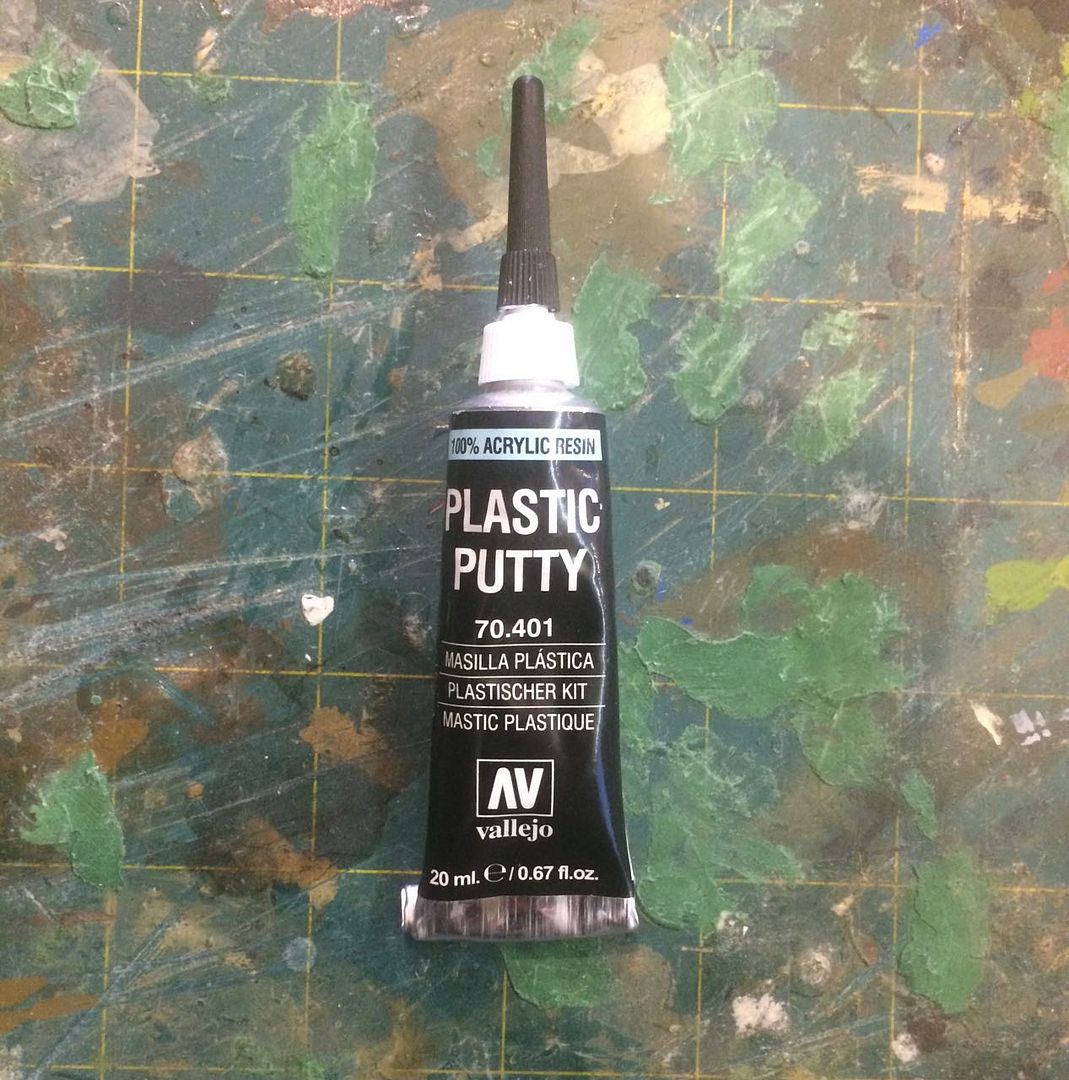
  • Rucksacks, I started with green stuff but in order to get a consistent size and shape switched to plasticard 3mm wide x .25mm thick (ish) which I cut in to 2mm strips then bulked out with Vallejo plastic putty, which is great for all sorts of bits in this scale, if you want something pipe it.

  • Roll Matts, .5mm plastic rod or brass rod cut to 2mm-3mm length, plastic rods better as you get square ends.

  • Grease Cans 1mm - 1.5mm plastic rod cut to 2 - 2.5mm lengths
  • Rubbish Sacks, piped with vallejo plastic putty
  • Sleeping Bags, green stuff or Vallejo plastic putty
  • Tarpaulins, green stuff
  • Cam Nets, green stuff, rolled to the approximate thickness required, then applied to vehicle, trimmed to size, pulled and pushed to make it look like its hanging from ties, then textured using a sharp point and a knife blade, ideally dipped in water to stop the green stuff adhering to the instrument of choice.
  • Air ID Marker Panels, I believe the US ones are modular and can also be folded so anything from a small square to a strip 2mm x 6mm. I use tin foil.

  • Flags - Tin Foil cut to size
  • Crew served and individual weapons - trimmed from figures, yet to really give this a go
  • Wheels - I think Heroics and Ross do some but I have yet to get my hands on any
  • Jerry Cans - I gave up :), any one knows of any let me know.


Where To Stick It

The important thing to bear in mind when stowing any vehicle is that it is a working machine:
  • Bits of it are hot, 
  • Bits of it move, 
  • Hatches, panels and turrets need to be accessible and able to function to allow entry exit and access for maintenance.
  • Air needs to circulate through engine grills to cool engines.  
Most of these places are best avoided and therefore the space on the vehicle to stow things is actually fairly limited.  Having said all that sometimes you have to pack in a hurry so there will always be the odd exception but as a general rule most crews will stow there wagons in a way that does not impair there ability to fight and maintain the vehicle.


Friday, 27 September 2013

Modelling - Converting an S&S Type 63 to Type 89


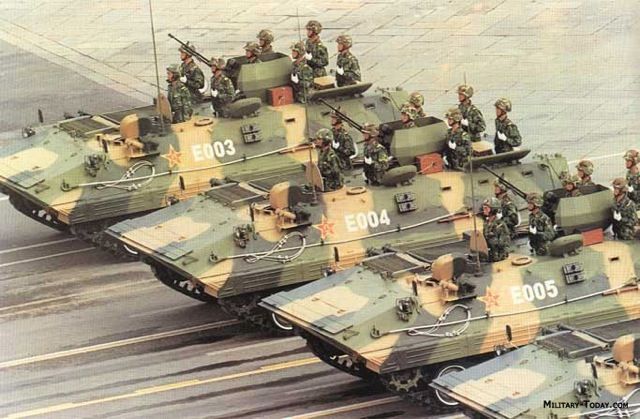
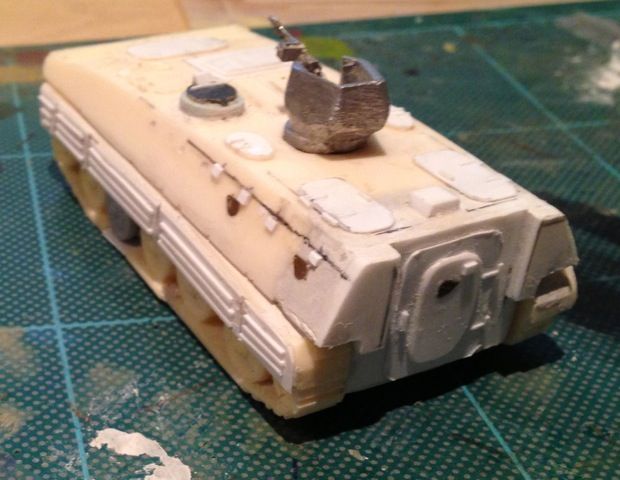
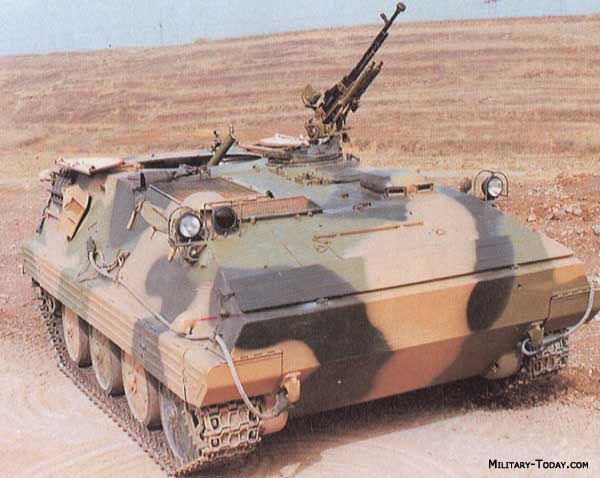
The Type 89 or ZSD 89 entered service in 1990 and is an evolution of the Type 63/85 family. The vehicle is capable of carrying 15 and is armed with a 12.7 mm QJC 88 HMG mounted in an open protected mount. The vehicle is amphibious and provides the basis for a large number of varients covering supporting roles from recovery to observation post vehicles and weapons carriers. In addition the vehicle has been adapted as the basis for a number of Artilery systems. Given its relatively wide deployment and the variety of roles it fills it seemed a worthwhile activity to try and create one through converting the S&S Type 63.


The Type 89 is 3.13m wide 6.125 m long and 2.59m high, whilst the Type 63 is 2.978m wide, 5.476m long and 2.58m high. In 1/72 scale this equates to a difference in width of 2mm and in length of 9mm. Given the difference in length and the overal similarity in shape. I decided to focus the conversion on lengthening the vehicle only.


There are plenty of pictures on the web both of the real vehicle and 1/35 model kits both of which provide good sources of information on what things look like and what goes where. In addition vehicle plans, like these from the Hobby Boss 1/35 scale kit allow you to create effectively a scale drawing from which key measurements can be taken although this is less critical on a conversion and more critical on a complete scratch build.


The S&S Models type 63 APC is the basis of this conversion which of itself is a very attractive model of the most numerous of the Chinese APCs. Other than the length and width differences already discussed the remaining features that would need to be changed include:
  • the arrangement of the engine decks
  • two additional hatches over the extended rear deck.
  • external fuel tanks
  • an extra road wheel.

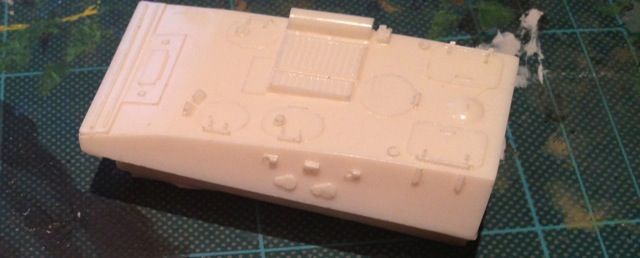
You have two options to extending a vehicle, cut it in half or build on the back, in this case I decided to build on the back. The first job was to remove all the detail no longer required, primarily the rear hatches and back door.


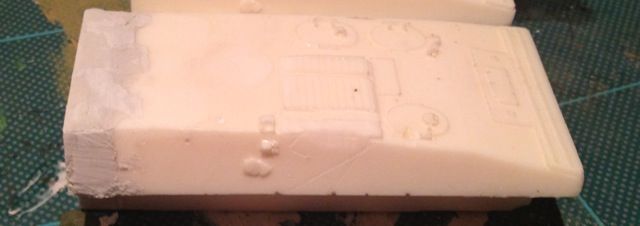
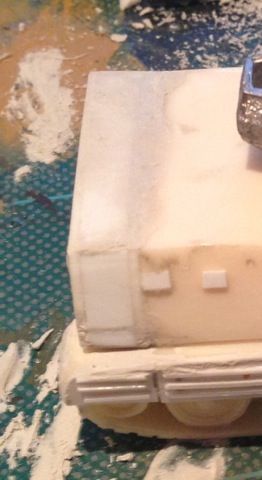
I then built up the extension to the rear using Plasti-card. I am not a great precision cutter so my general approach is to get it broadly right then fill and sand my secret tool in any modelling endeavour is this baby.


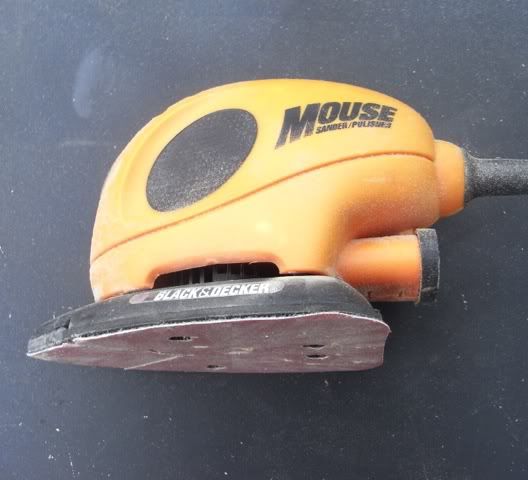
With care it can rapidly rectify faults aid in complex shape development and smooth filler rapidly. if your not careful it fills your lungs with dust and wrecks your models so, masks and tidying up are one required activity and another is the taking care when your sanding. The main benifit for me is the speed.


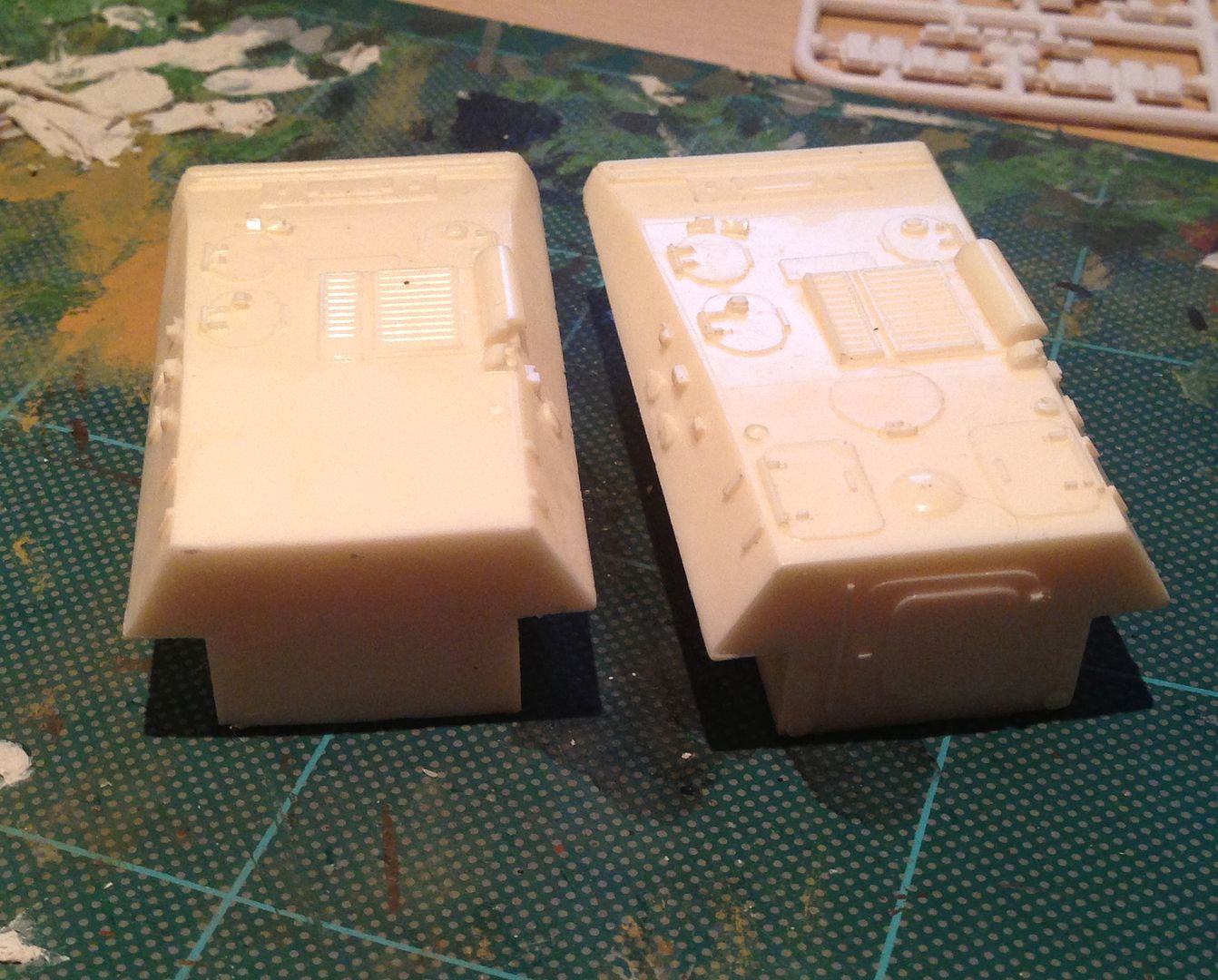
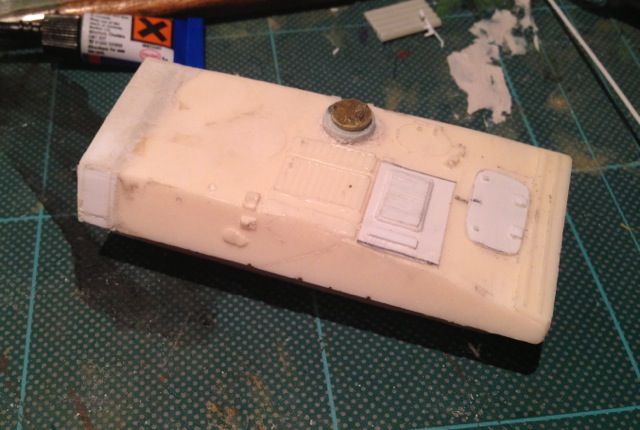
Having sorted the backend, I then built up the engine deck out of card stock before, attacking the roof hatches and seating the turret which comes from another of S&S's kits the ZSL 92A or Wz551 as it appears in their Catelouge. With the forward hatches removed the 25mm Cannon from the ZSL 92 can be used although this varients did not enter service.


I then added the rear door detail, the fuel tanks and hull side detail before attacking the tracks.


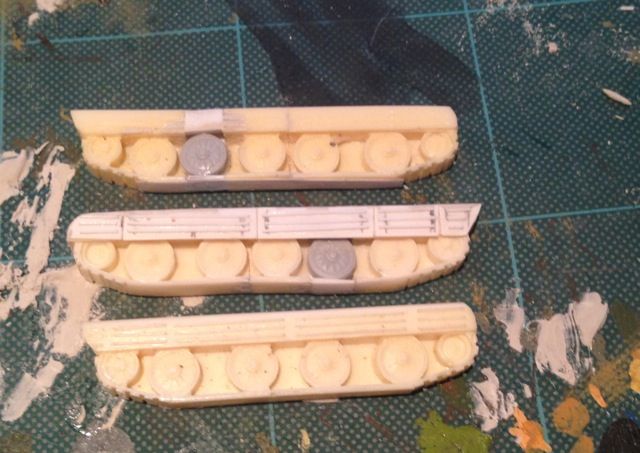
The tracks needed:
  • extending,
  • a new road wheel inserting
  • the road wheel spacing to be representative
  • appropriate side skirts to be built up.
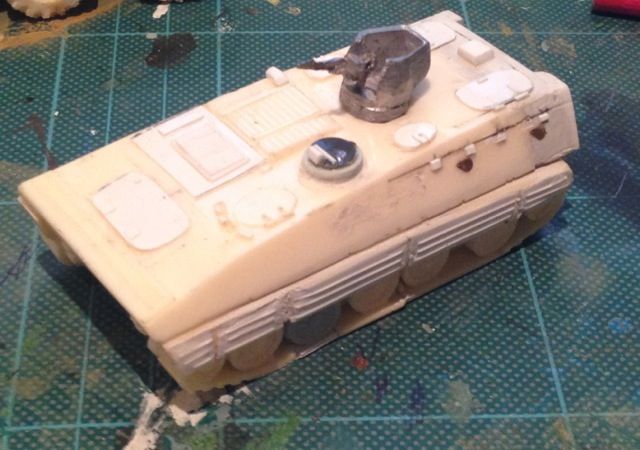
This needed the track cutting in Three places to address the first three items, once cut Plasticard was attached along the track length before the gaps were filled using Plasticard and are friend the filleing and fileing solution, during this stage all surface detail on the existing side skirts was removed.


The side skirts were then built up using Plasticard and filler to create a smooth join with the top of the track guards. The reinforcing ribs were constructed out of plastic rod. I ended up doing this twice having started with 1 mm plastic rod and ended up with .3mm which gave a much better effect


The model is off to Shaun at S&S at the weekend who is going to see if he can modify it for ease of casting then pop a few out to see what they look like. If they are good I will put some thought into creating some of the variants.

References:

Saturday, 7 September 2013

Equipment - PLA Infantry, Principal Weapon Systems


Before examining the orbat of PLA infantry units it is probably worth running through the weapons they deploy. I needed to do this to get the whole thing straight in my mind. The scale of the PLA like the Soviet army defeats instantaneous introduction of new equipment. Whilst the Class A units generally have the latest uniforms and equipment the Class B and Class C units are generally working with older equipment. Within the Class A units there is a concept of a Rapid Deployment Force element, I am assuming this has more to do with training standards but inevitably it probably has an impact in the initial period of system deployment. Equaly there is variability between light and heavy forces.


I have assumed that forces deployed in power projection will be Cass A and the Class B and C units are more likly to be used for home defence or less complex opperations such as power projection over land boundaries. Whilst there is a considerable amount of information on line, there is no one source that really covers the breadth of Infantry equipments across Small Arms, Anti Tank, Anti Aircraft, Mortars, Machine Guns and Grenade Launchers.


Inevitably the historic record of weapons the pace of recent development and the number of prototypes and export versions, together with factory, western and PLA designations creates a morass of confusion.  I have tried to confine this post to things one might reasonably expect to encounter.


Of the references consulted Sino Defence is probably the best of the English language resources and Military Weapons of Japan's Neighbors is the best overal, with considerable detail on the weapons, their evolution and deployment, in addition the references used are quoted. Working with the google translation of the original Japanese is workable. World Guns is very good for the Machine Guns.


Rifles, Carbines and Light Support Weapons


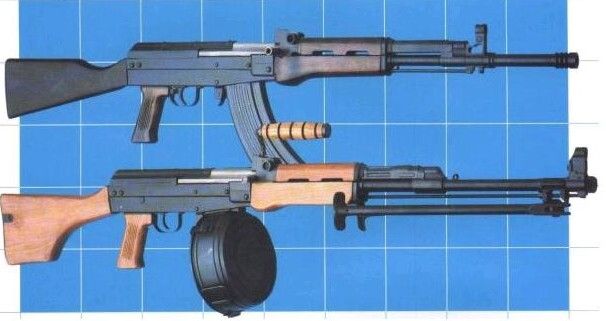
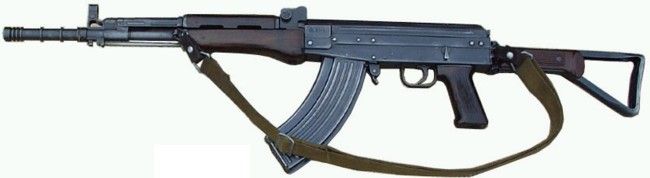
Type 81 Chinese designed variant of the AKM incorporating features of the AKM, SKS and Dragurnov sniper rifle. Deployed in 3 principal variants, Rifle, SAW and folding stock rifle all chambered to 7.62mm. the principal difference between this and the type 56 is the short stroke recoil mechanism that improved accuracy. principal PLA, small arms system from 1980 - 1995, now only found in lower readiness units.


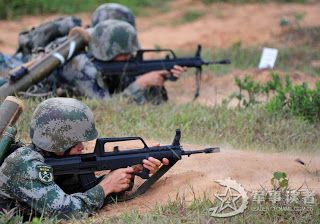
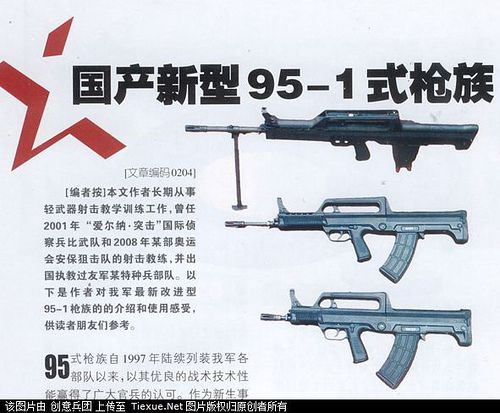
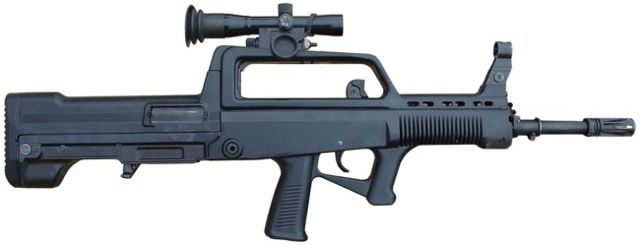
Type 95 Replacement for the Type 81 first observed in 1997. The weapon system is a Bulpup design of 5.8mm calibre. In addition to the basic rifle QBZ 95 a carbine is produced QBZ95B and light support weapon QBB95 are also produced. The rifle and carbine are capable of being fitted with a 35mm UGL. An export version chambered to 5.56mm is also produced.


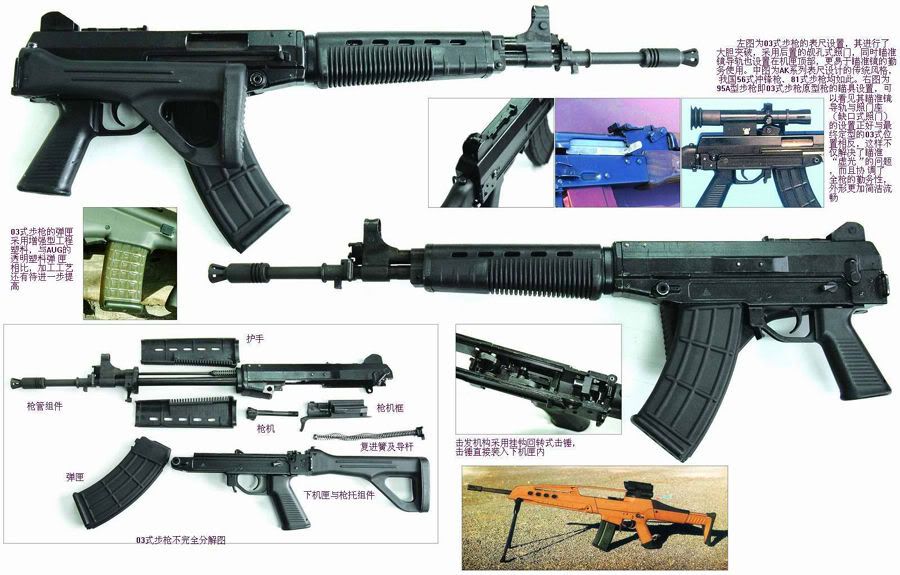
Type 03. The QBZ 03 series of small arms is a 5.8mm assault rifle designed to replace the Type 81 in units where personnel do not need to acheive the levels of proficiency requiered to effectively handle the QBZ 95 weapons and where the expense of the QBZ 95 is not warrented. As such it provides a platform that allows the Militia and elements of the reserves to get on to a common calibre and munition type with the rest of the PLA.


Sniper Rifles

In my euphoria at completing the mortar section I failed to realise I had not covered Sniper rifles, I have yet to work out exactly what fits where orbat wise.

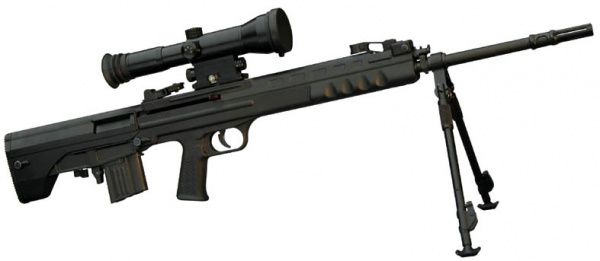
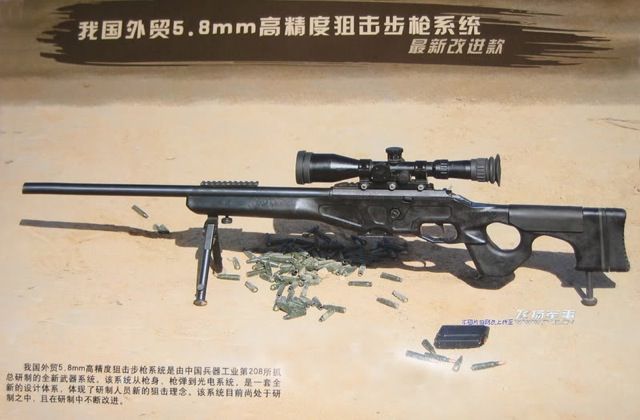
QBU-88.  The QBU-88 is a sharp shooter weapon rather than a sniper rifle per se.  The weapon can fire either the standard 5.8mm round or the extended 5.8mm x 42 round.  The rifle is a semi-automatic gas operated weapon with an extended barrel and bipod.  Whilst equipped with Iron sites it is routinely used with either optical or night sites,


FY-JS.  The FY-JS 5.58mm bolt action sniper rifle is issued in relativly low numbers to units of the PAP and PLA.  I am a little unclear as to weather this is in service or not although it would appear to fill a gap and is rated with a higher accuracy than the QBU-88.


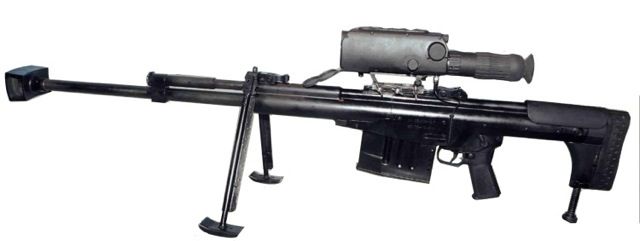
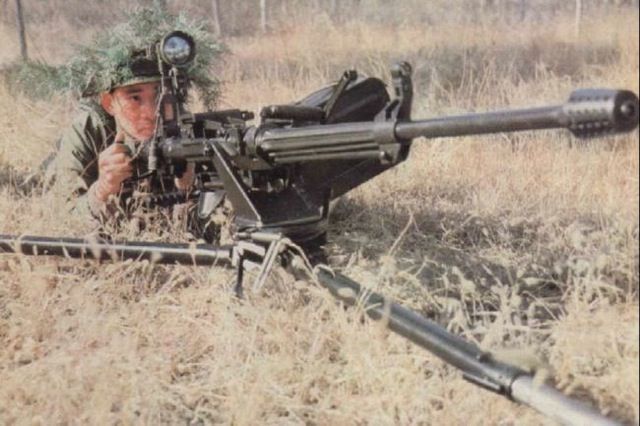
QBU-10   The QBU 10 is the PLAs anti materiel Sniper Rifle, whilst performance of the weapon and the round falls short of western capability it remains effective in this role.  According to Chinese literature it is effective to 1000m and is a gas operated semi automatic weapon of 12.7mm calibre.  The sighting unit provides a x8 optical, Night sight and Laser Range finder capability.


Medium Machine Gun/SAW


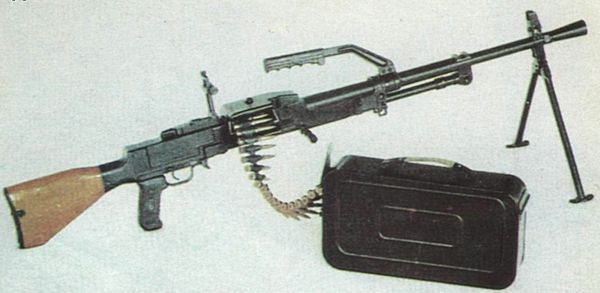
Type 67. The QJY 67 is a 7.62mm belt fed GPMG, it is capable of operation in the light or sustained fire role. I assume this will be used in units where the Type 81 small arms systems are still deployed as the SAW.


Type 88. the QJY 88 is a 5.8mm Belt Fed gas operated GPMG capable of being deployed in the light or sustained fire roles, more commonly deployed InThe SAW role it is unpopular due to weight and relative stopping power although firing a heavier round than the QBZ 95 family of weapons. Effective range is reported as 800-1000m. it is also capable of being deployed on vehicles and has been seen on a remote weapons mount.


Heavy Machine Guns


Type 77. Gas operated air cooled 12.7mm belt fed machine gun is a Chinese design incorporating elements of the Soviet DshK, Operated from either a tripod or vehicle mount. Still in service with lower readiness units. Will probably phase out as Reserve, Militia and auxiliary units equip with the QBZ03, one source quotes it as being out of service.


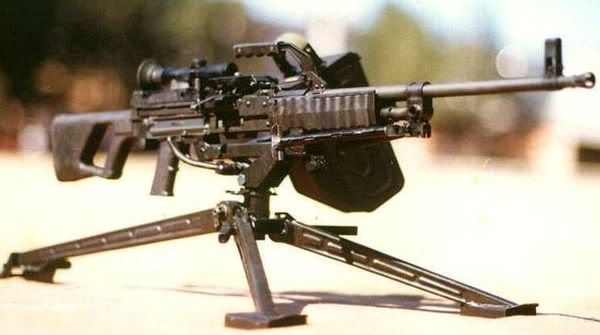
Type 89. The QJZ89 is a 12.7mm belt fed heavy machine gun generally deployed triopod mounted in the ground role. The Tripod can be used to mount the gun in either the high or low positions. The QJZ89 is also used deployed on a vehicle mount. It is used for fire support at Company and Battalion level.


Type 02. The QJG 02 14.5mm Heavy Machine Is an indigenous Chinese design currently only available on a low mount AA ground configuration, It is replacing the Type 58 that was primarily used in Chinese service as an AAMG on single, twin and quad mounts.


Grenade Launchers


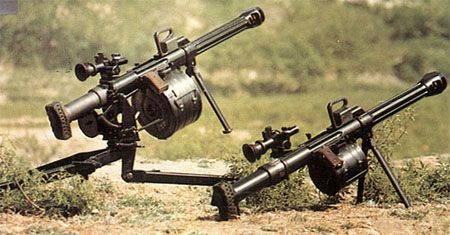
Type 87. The QLZ87 is the PLAs automatic grenade launcher, it can be used in either the light role from a bipod mount or the sustained fire role from a tripod mount. The weapon fires 35mm Grenades to a range of 600m (light role) and (1750m Sustained Fire role)


Light Anti Tank Weapons.


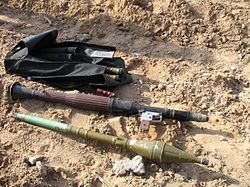
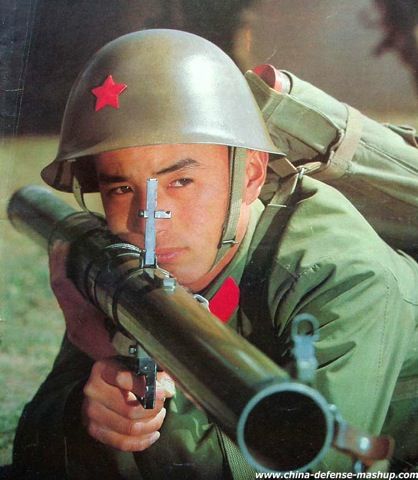
Type 69/70. 40mm RPG reloadable Light anti tank weapon, it together with the Type 70 62mm rocket provide the LAW capability to the PLA through to the 1990. It is functionally similar to the soviet RPG 7. Probably still deployed to lower readiness units.


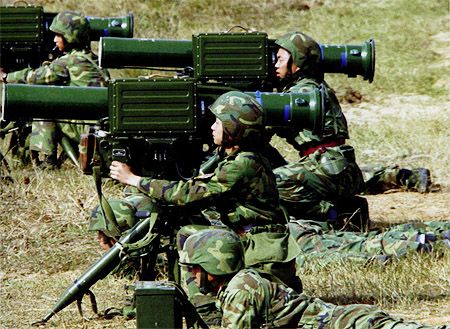
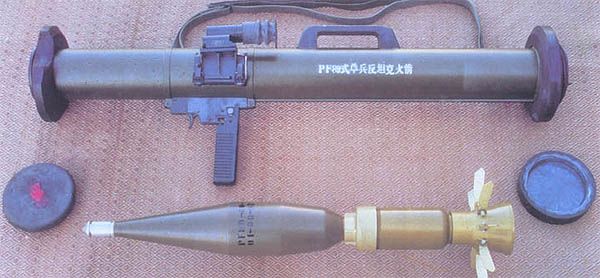
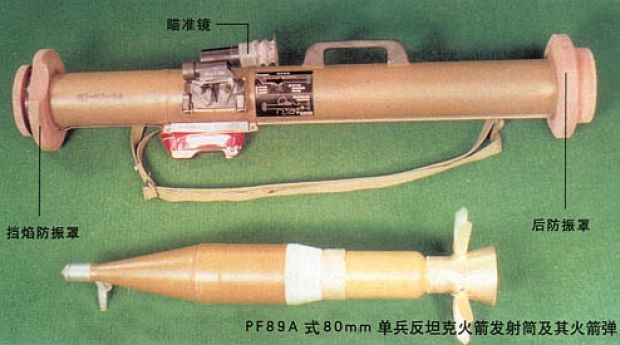
Type 89. The PF89 fire Arrow, is the standard squad anti tank weapon. it is an 80mm one shot disposable light anti tank weapon introduced into the PLA in the 1990s. Effective range is reported as 200m maximum range 400m. It has the following variants:


  • PF89A was an upgrade with a range of 180m -1000m optimised against defended positions/concrete and light armour, this is probably a HEAT MP round with the longer ranges being achievable against soft skin and infantry targets primarily as it is a bursting weapon with a 25m damage radius.

  • PF 89-1 and 2 introduced in 2002/3 included a therma-barick war head with a range of 25m-850m.


Medium Anti Tank Weapons


Type 65/78 82mm Recoiless Rifle still used in lower readiness units as the company level Anti Tank System. In light units it can form both the company and Battalion level anti armour system.  In service across the majority of infantry units until the 1990s


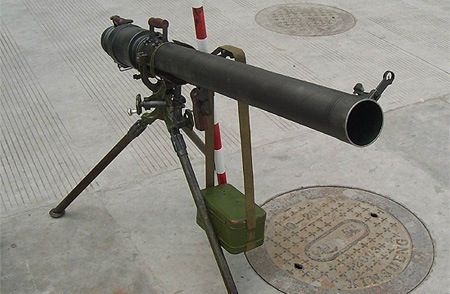
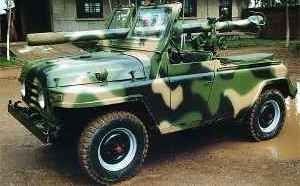
Type 75 100mm Recoiless Rifle usually deployed as a vehicle mounted system in a BJ212 jeep, it is variously reported as 105mm and 100mm, widely deployed, still in use with low readiness units as the Battalion level Anti Tank System. All the Recoilless Rifle systems have limited utility against modern armour but remain effective against light armour and Personel. Also used extensively with airborne forces


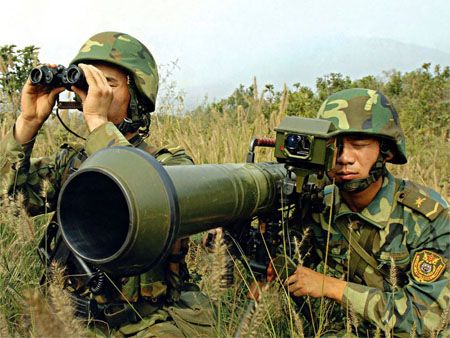
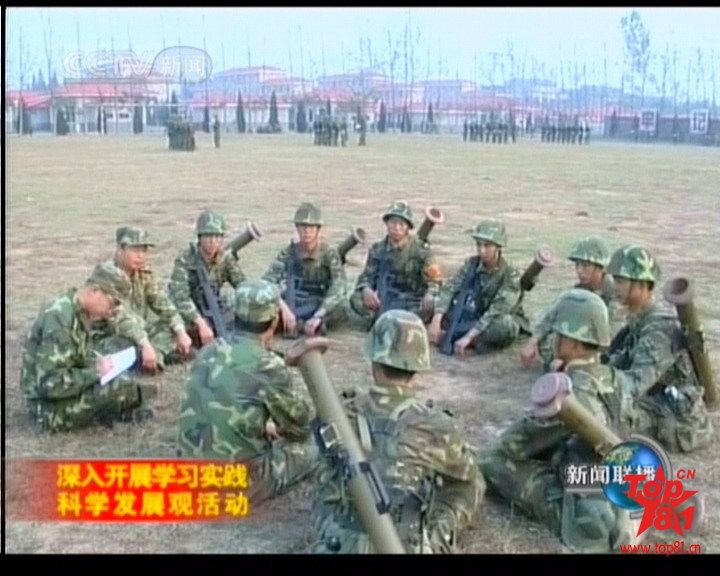
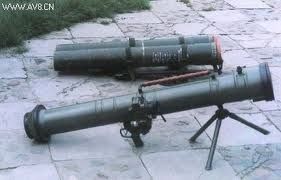
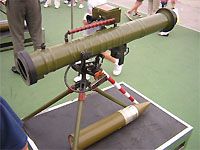
Type 98. The PF 98 120mm Rocket system is deployed with anti tank detachments at Company and Battalion level, it has largely replaced the Recoilless Rifles in higher readiness units.. It is used in two distinct configurations and has a variety of different warheads available.

  • The system deployed at company level is a reload able launcher, hand controlled with a small forward bipod to assist controlling the weapon to fire the HEAT round to a maximum effective range of 400m.


  • The battalion deployed system can be tripod mounted and includes computer assisted lay and a day night site. It can deploy the standard HEAT round against targets out to 800m and the Heat MP round out to 1800m. The weapon can also be mounted on the LYT 2021 combat buggy. The HEAT MP round is an anti Personel/structures/light round with optimised for fragmentation with a 25m burst effect radius.


Anti Tank Guided Weapons


Unusually the Chinese currently field multiple generations of ATGW across high readiness formations, with the older HJ-73 being deployed on IFV turrets and the HJ8 and HJ9 equipping AT units within formations. My current understanding is that the PF fire arrow systems are used at squad, company and Battalion level, whilst the Hong Jung Red Arrow systems are used at regimental level. it is currently not clear to me if guided missile systems are used in the Battalion AT platoons in mechanised units.  Number of sources report ATGW platoons in battalions, though the evidence is contradictory.

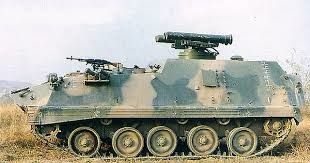
HJ-73 the proverbial suitcase sagger can be deployed as a vehicle mounted system primarily off the Type 85 and 86 IFVs.  Also used as a dismounted system.  considerably extended lifecycle through the HJ 73B and C which have improved guidance systems reported as SACLOS, range is reported as 1,000m - 3,000m however warhead performance has not been addressed which limits performance against modern armour.


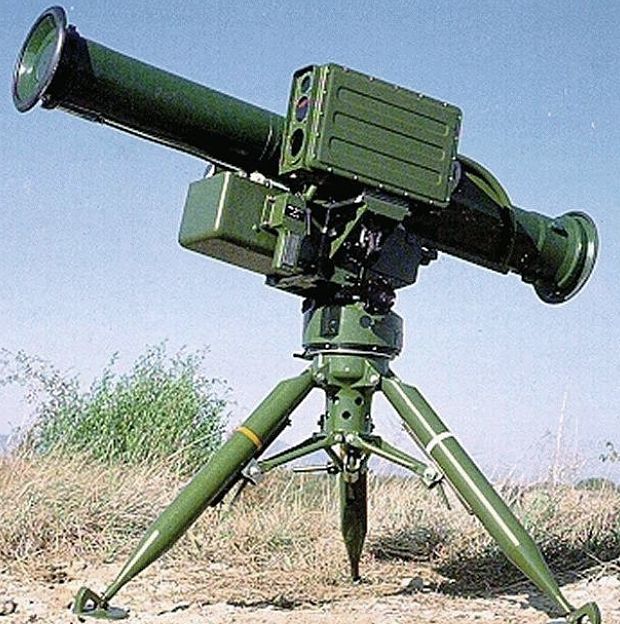
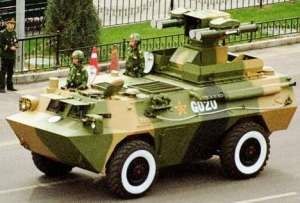
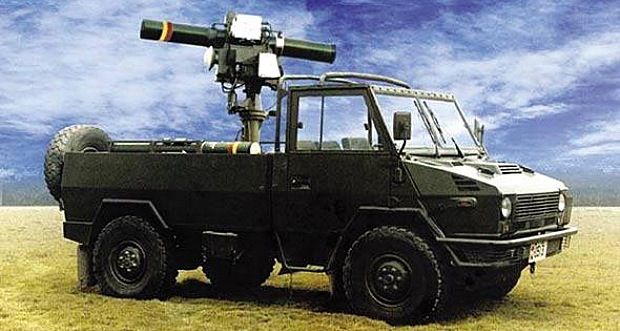
HJ-8. The HJ8 missile system has been significantly upgraded over its lifetime. It can be ground mounted or deployed from a range of platforms. Weight precludes it from being described as truly man portable. The missile is a 120mm, Semi Automatic Command to Line of Sight System, available as single or Tandom warheads allowing penetration of 800mm and 1000mm of RHA repectivly out to a maximum range for later versions of 4000m (initially 3000m). It has been identified as being deployed on:
  • Type 85 APC
  • Type 92/90 APC
  • Z9, Z10 and SA342L Gazelle
  • Ground Mounted


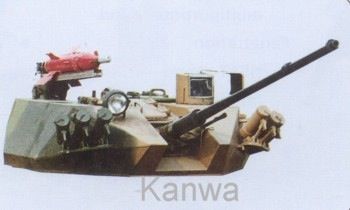
HJ-9. The HJ9 missile system is available only as a vehicle deployed system. Currently mounted on either the WZ550 or NJ2046 high mobility truck. The missile is a 152mm Tandom warhead design capable of penetrating 1200mm of RHA equivalent out to 5,000m, The guidance system is described as SACLOS with a laser rather than a wire providing the transmission medium. The sighting system includes TI.  A number of sources have a ground mounted variant available which is described as being not easily re-deployable without a vehicle so somewhat like TOW.


Mortars


The chinese deploy quite a wide range of Light medium and heavy mortars,  because of time I was pretty much going to pick one from each type in order to illustrate the capability.


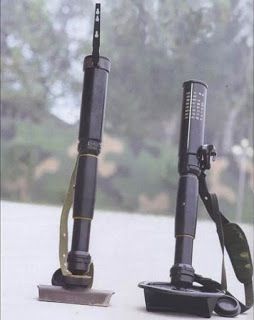
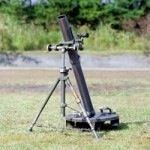
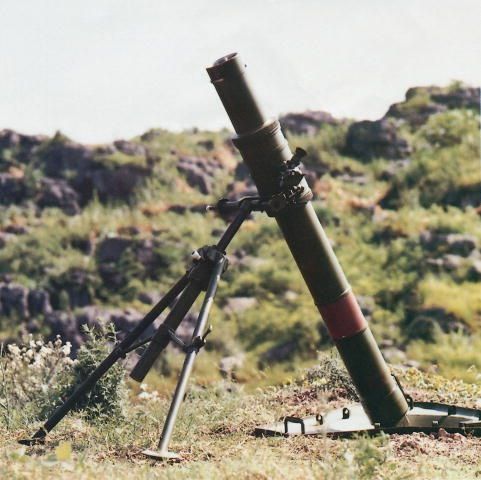
mortars include a 60-mm. hand-held system used by infantry and special forces. This is most probably deployed at platoon level.


Type 93 60-mm. f mortar weighs fires 20 rounds/min. to 5.5 km.  This is a light weight weapon and most likely found in Airborne and Light units.  Depending on unit structure this is probably used at company level.


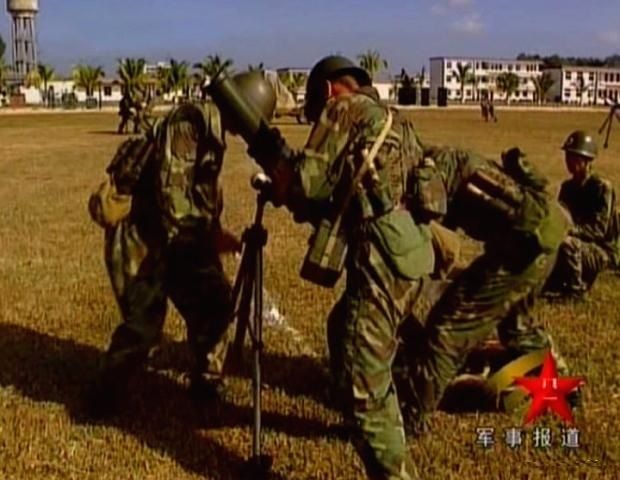
I suspect that the 81/82 such as the W91 and W87 81-mm. mortars that fire to 8 km. and 5.6 km, respectively these weapons probably equip company level support elements in mechanised and armoured units


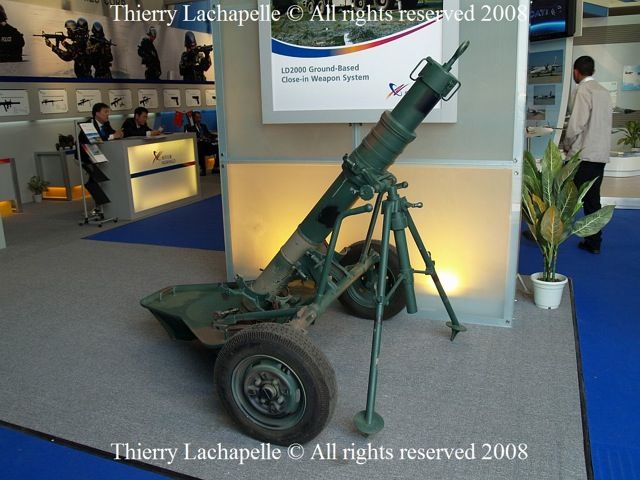
81Auto/100/120 range of mortars are most likely found at Battalion level or potential regimental level for certain airborne and light units. The PLA's version of Russia’s Vasiliyek 81-mm. automatic mortar, called the W99 or SM-4, which comes in a towed version or mounted in a Hummer-like vehicle. It fires four rounds in 2 sec. out to 6.2 km.


The Type 89 100mm Morter is used as a heavy battalion level mortar in units where weight is an issue, airborne mountain, light etc.  In mechanised units my understanding is that the 120mm mortar is more commonly deployed.


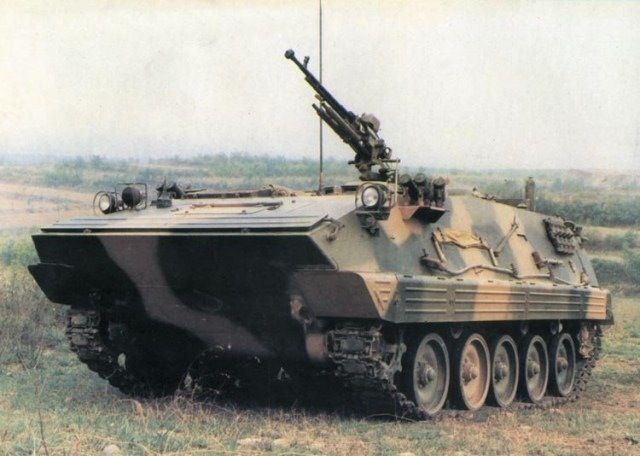
Mortar Carriers come from a variety of APCs here are the Type 89 which is used to mount 120mm and 82mm mortars and the Type 63.  Whilst the ZSL 92 has mortar variants its not clear if these are export only versions.


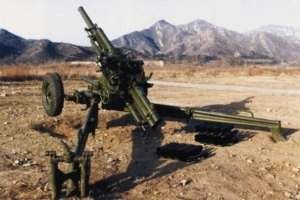
The W86 120-mm. towed mortar weighs 206 kg. and fires 20 rounds/min. to 4.7 km.


AAGM


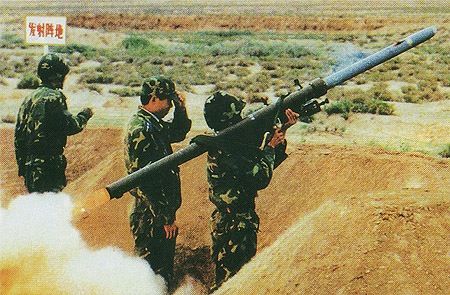
HY-6 The designation of the main manpad is very confused, variously reported as HY-6 or FN-6, the Pinyin name is Hong Ying 6 which has a level of consistency. This is a SAM-7 looky liky, its a digital IR seeker capable of engagement from all angles out to 6,000m or a maximum altitude of 3,500m.  It is deployed within air-defence platoons at unit level.  Searching for imagery of something that translates as Red Tassel should not be done in front of small children.


I think that pretty much rounds it up, this has been quite hard work but a fairly solid view of what goes where.  If any one has any more information or photos particularly of things like Dismounted HJ9s I am always interested in improving the accuracy of whats written.


Updated:

09 March 2013 added Sniper Rifles and New 60mm Mortar images.

References:

China Defence Mash Up a good list no real information other than names and pictures, but it tells you what you are looking for.
Military Weapons of Japan's Neighbours, Chinese Army PF-98 Japanese site with some interesting detail not found elsewhere, working with the translations is difficult but worthwhile. This link references the Japanese language site.
PF 98 Sino Defence
Sino Defence Army good descriptions of most current crew served weapon systems, does not cover mortars, LAWS, GPMGS, incoming or outgoing systems.
Military Weapons of Japan's Neighbours Chinese Army
The Chinese Army Today, Tradition and Transformation for the 21st Centuary, DJ Blasko
Weapon Systems.Net

Related Posts:

Equipment - PLA Vehicles, Tanks